Our Services
Convertible Top Repair
Convertible top repair and replacement in Goleta and Santa Barbara, covering the hydraulics, the motors and electronics, the fabric, and the seals. Very few shops on the South Coast will take this work. We do, on every make of convertible.
A convertible roof is not one system, it is three working together. A hydraulic circuit moves the frame. A network of motors, microswitches and position sensors tells the car whether the roof is where it thinks it is. And the fabric top, rear window and seals keep the weather on the outside. When a roof stops halfway, the hard part is knowing which of the three actually failed.
That is the gap we fill. Most general shops decline this work and send you to the dealer, where the default answer is often to replace an entire assembly. We diagnose the real fault, whether that is a leaking cylinder seal, a corroded microswitch, a chafed wire in the trunk hinge, a blocked drain, or a top that has genuinely reached the end of its life. Then we tell you plainly what it will take to fix, with a free written estimate before any work begins.
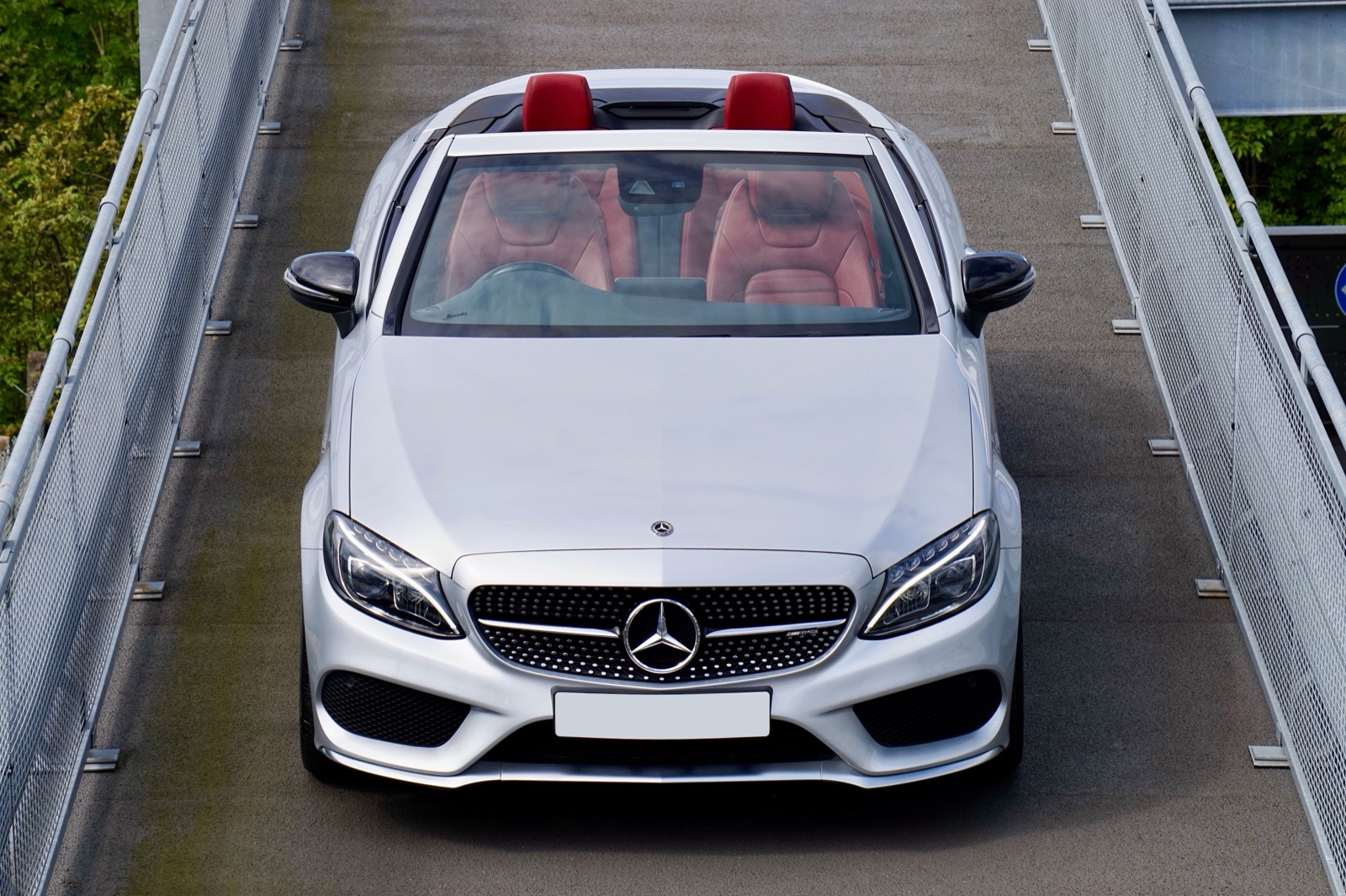
What We Repair
- Fabric and vinyl soft-top replacement
- Hydraulic pumps, cylinders, hoses and fluid leaks
- Top motors, microswitches, position sensors and control modules
- Water leaks, weatherstripping, drain channels and drain tubes
- Rear window repair and replacement, glass or plastic
- Frame, linkage and alignment adjustment
- Diagnosis of a roof that stops partway, or will not move at all
Three Systems, One Roof
Where Convertible Tops Actually Fail
Almost every roof complaint traces back to one of four areas. Knowing which one saves you from paying for the wrong repair.
Hydraulics
The most common failure of all. The rod seals and O-rings in the lift cylinders shrink and crack with age, and the system starts losing fluid. The roof gets slow, then stops partway, then stops altogether. Fluid pooling in the trunk or a damp spot near the rear quarter panel is the classic sign. Leaks also come from the pump seals and the hoses, so the fix depends entirely on finding the actual source rather than just topping up the reservoir.
Electrical & Control
The car will not move the roof unless every sensor agrees on its position. A single dirty or corroded microswitch reporting the wrong latch state is enough to stop the whole sequence, and it will often set a fault and flash the roof button at you. Wires running through the trunk hinge chafe and break after years of cycling, which produces intermittent faults that come and go. Control modules do fail, but far less often than the sensors and wiring feeding them.
Fabric, Rear Window & Seals
Sun and weather break down the top itself. The material fades, stiffens and eventually cracks, the coating that sheds water wears off, and rear windows haze over or begin to separate from the fabric around them. Weatherstripping hardens and stops sealing. These are wear items, not defects, and on the coast they wear faster than the manufacturer's schedule assumes.
Drains & Water Intrusion
Most "leaking convertible" complaints are not leaking tops at all. Convertibles route rainwater through channels and drain tubes that exit under the car. Fill those with leaves, pollen or dust and the water backs up and overflows into the trunk or the rear footwell. A car that only leaks in heavy rain, or leaks into the carpet rather than through the headliner, is usually telling you the drains are blocked.
Why This Is Hard To Find
A Repair That Falls Between Two Trades
Convertible roofs sit in an awkward gap. General repair shops are set up for engines and brakes and will not take on roof hydraulics or trim work. Upholstery and trim shops can sew and fit a beautiful top, but they are not equipped to diagnose a control module, read a position-sensor fault, or trace a broken wire through a trunk hinge. So the car gets bounced between them, or sent to a dealer.
We work the mechanical, hydraulic and electrical side of the roof in-house with factory-level diagnostic tools, and we manage the fabric and trim portion of the job end to end so you are dealing with one shop and one estimate rather than coordinating two.
The practical result: you get a real diagnosis before anyone quotes you a new roof assembly. A large share of the roofs we see need a seal, a switch, a wire or a drain cleared, not a replacement.
Signs Worth Bringing In
- The top stops partway through its cycle
- The motor runs but the roof doesn't move
- The roof button flashes, or a roof warning appears
- Operation has become noticeably slower
- Oily fluid in the trunk or rear quarter area
- Water in the footwell, trunk or spare-wheel well
- Damp headliner, or drips at the windshield header
- Rear window hazing, yellowing or pulling away
- Visible cracks, seam splits or worn patches
- Wind noise that has gotten worse over time
Local Conditions
What the Santa Barbara Coast Does to a Soft Top
Our climate is unusually hard on convertible roofs, and in a way that is easy to miss because the weather feels so mild. Strong year-round UV is the main culprit: it breaks down the fibres and the water-repellent coating, fades the colour, and leaves the material stiff enough to crack along the fold lines. Dark tops show it first.
Salt air compounds it. Coastal humidity carries salt inland, and it accelerates the same UV breakdown on the fabric while quietly corroding the electrical contacts, latch microswitches and frame hardware underneath. That is the same coastal-corrosion pattern we see on connectors and brake components throughout the cars we service here.
Then there is what falls on the car. Cars parked under trees collect leaves, pollen and seed debris in the drain channels, and that is what turns a healthy drain system into a wet trunk during the first real rain of the season. If your convertible lives outside, clearing the drains before winter is the single highest-value thing you can do for it.
None of this means a coastal convertible is doomed. It means the roof is a maintenance item here, not a fit-and-forget component, and that catching a hardening seal or a blocked drain early is far cheaper than dealing with a soaked interior or a mildewed top later.
We go deeper on all of this in why convertible tops fail on the Santa Barbara coast, including how to tell a blocked drain from a genuine leak and what actually extends a top’s life here.
Materials
If You Need a New Top
When a top is genuinely worn out, the material you choose changes how it looks, how quiet the car is, and how long the next one lasts.
German A5 Canvas
The three-layer acrylic cloth used as original equipment on many German convertibles: twill-weave face, rubber inner layer, fabric backing. The best acoustic insulation of the common options and the most authentic look on a car that came with it. The stiffest to work with, and the most expensive.
Twillfast RPC
An American-made cloth built to the same three-layer pattern, with a more flexible coating. Very close to A5 in appearance and durability, easier on the frame through its life, and usually less expensive. A sensible choice on most cars where originality is not the priority.
Stayfast Canvas
A tightly woven, rubber-cored canvas that stays flexible in cold weather and resists wrinkling. It lacks the fabric backing of the two above, so it is a little less refined inside, but it is durable, proven, and the most economical of the three.
Vinyl remains an option and costs less again, but it hardens and fades faster under our UV load than any of the cloths above, so we will usually steer you toward canvas unless the car originally wore vinyl and you want it correct. We will walk through the trade-offs for your specific car rather than defaulting to the cheapest or the dearest.
Every Convertible
Makes We Work On
German and British convertibles are our home ground, and that is where the deepest diagnostic capability sits: BMW 3 Series and Z-cars, Mercedes-Benz SL, SLK and E-Class cabriolets, Audi A3, A4 and A5 cabriolets, Porsche 911 and Boxster, Volkswagen Eos, Beetle and Golf cabriolets, plus Jaguar, Land Rover, Aston Martin, Bentley, Rolls-Royce and MINI.
We are not limited to those. Convertible top work is scarce enough on the South Coast that we take every make: Mazda Miata, Ford Mustang, Chevrolet Camaro and Corvette, Lexus, Toyota, Nissan, Fiat and the rest. The hydraulics, switches, drains and fabric behave much the same regardless of the badge, and the diagnostic approach does not change. If it has a roof that folds, bring it in.
Common Questions
Convertible Top FAQ
My top stopped halfway. Is it stuck for good?
Usually not. Most roofs that stop mid-cycle are reacting to a position sensor or latch microswitch that has lost agreement with the rest of the system, or to a hydraulic circuit that has dropped below the pressure it needs to finish the travel. Both are repairable. Nearly every car also has a manual override procedure to get the roof closed and the car weathertight in the meantime, and we can talk you through yours over the phone if you are stuck.
Do I need a whole new top, or can it be repaired?
It depends entirely on what failed, and that is exactly what the diagnosis is for. Hydraulic leaks, switch faults, wiring breaks, blocked drains and failed weatherstripping are all repairs. Full replacement is warranted when the fabric itself is cracked, split at the seams, badly faded, or when the rear window has separated beyond repair. We will tell you which situation you are in before you commit to anything.
Water is getting in. Is my top leaking?
Often it is not. Convertibles drain rainwater through channels and tubes that run down inside the body and exit underneath the car. When those clog with leaves and pollen the water backs up and overflows inside, most commonly into the trunk or the rear footwell. Water appearing in the carpet rather than dripping from above usually points at drains rather than fabric. Clearing them is a straightforward job.
How long does a convertible top last here?
Longer than you would think if it is cared for, and considerably shorter if it is not. Our strong year-round UV and salt-laden coastal air both attack the fabric and its water-repellent coating. Washing the top regularly, re-applying protectant a couple of times a year, keeping the drains clear, and avoiding folding a wet top away all make a substantial difference to how many years you get.
Do you work on non-German cars?
Yes. For convertible top work specifically we take every make, including Mazda, Ford, Chevrolet, Lexus, Toyota and others. The systems are broadly similar across brands and the service is uncommon enough locally that we would rather help than turn you away. Our German and British specialisation still applies for everything else we do.
What does convertible top repair cost?
There is no honest flat answer, because a blocked drain and a full canvas replacement are not remotely the same job, and the price depends on your car, the material, and what the diagnosis actually turns up. We do not publish a number we would have to walk back. You will get a free written estimate before any work starts, and our rates are highly competitive with other independent specialists and typically well below dealership pricing.
Keep Exploring
Related Services
Ready When You Are
Get Your Roof Diagnosed
Same-day appointments available for most services. Honest estimates, warranty-backed repairs.
Book This Service
Request an Appointment
Send your request straight from this page — we'll confirm within one business day.
Prefer to talk it through first? Call (805) 967-1551 and ask for a service advisor. We answer during shop hours, Monday through Friday.