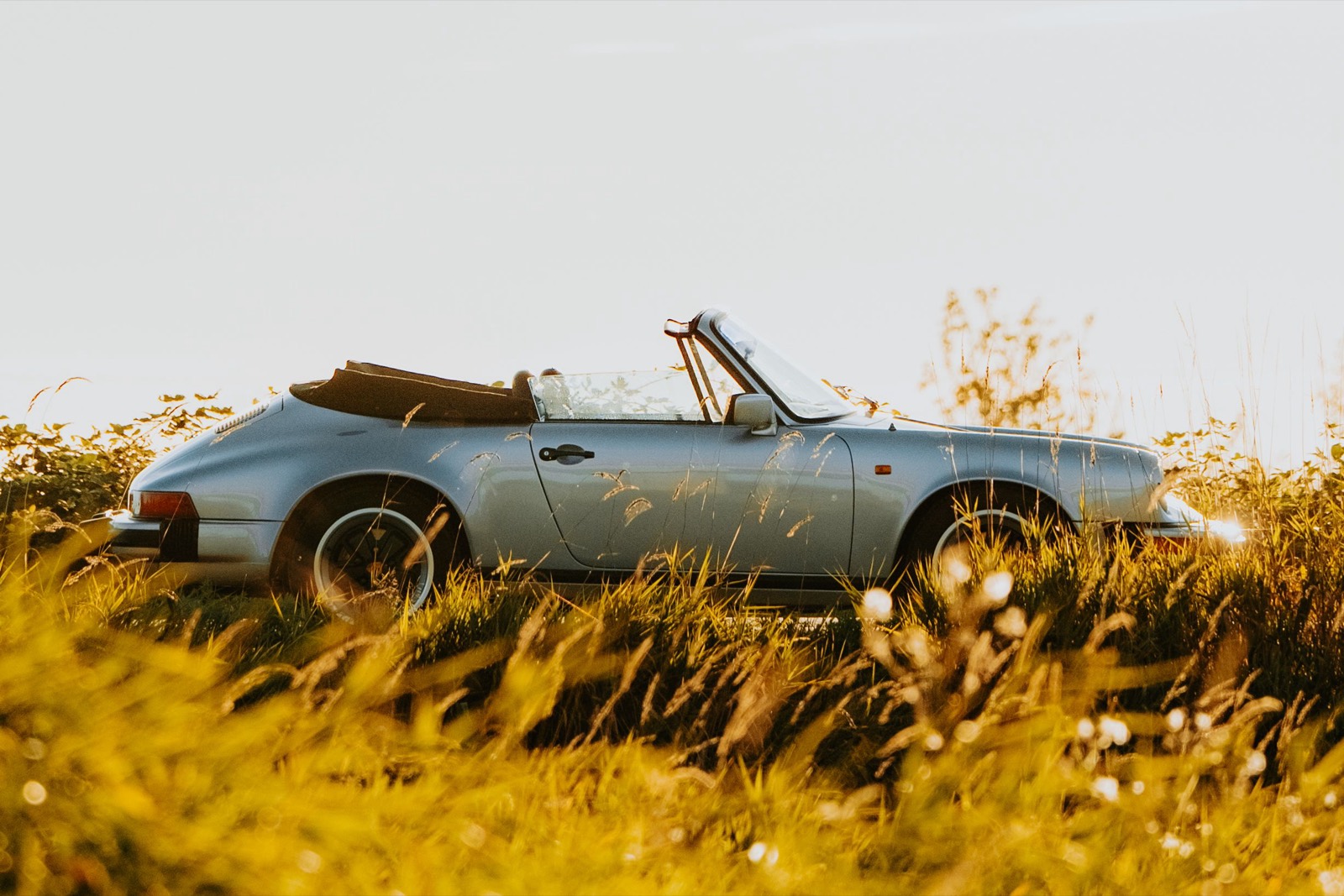
Santa Barbara is close to the perfect place to own a convertible. It is also, quietly, one of the harder places to keep one's roof in good shape. The same conditions that make dropping the top pleasant almost every day of the year are the conditions that wear the top out.
Convertible roofs also fail in a way that confuses people, because a roof is not one system. It is three, and they fail differently. Knowing which one has actually gone wrong is most of the battle, and it is the difference between a modest repair and being quoted a whole new assembly.
A Roof Is Three Systems Wearing One Cover
Underneath the fabric there is a hydraulic circuit: a pump, a set of cylinders and the lines between them, doing the physical work of folding and unfolding the frame. Alongside it runs an electrical system of motors, microswitches and position sensors whose entire job is to confirm the roof is where the car believes it is. And over the top of both sits the fabric, rear window and seals, which keep the weather out and take the full brunt of the sun.
A roof that stops halfway could be any of the three. That ambiguity is why so many shops decline the work.
What Our Climate Actually Does
Strong year-round UV is the primary enemy. It breaks down the fibres of the top and, more importantly, the water-repellent coating on the surface. The colour fades, the material stiffens, and once it has lost flexibility it starts to crack along the fold lines, which are exactly the places that flex every time you lower the roof. Dark tops show this first.
Salt air compounds it. Coastal humidity carries salt well inland, and it accelerates the surface breakdown while corroding what sits underneath: the latch microswitches, electrical contacts and frame hardware. This is the same coastal-corrosion pattern that shows up on connectors and brake components across the cars we service here. It is not unique to convertibles; convertibles just have more exposed hardware for it to find.
Then there is the debris. Cars parked under trees collect leaves, pollen and seed matter in the drain channels around the roof. That matters more than most owners realise, for the reason below.
The Leak That Is Usually Not a Leak
Most "my convertible leaks" complaints are not the top failing at all.
Convertibles do not simply shed rain off the edges. They collect it in channels around the roof and route it down through drain tubes that run inside the body and exit underneath the car. It is a plumbing system, and like any plumbing it clogs. Fill those channels with leaves and pollen and the water has nowhere to go, so it backs up and overflows inside, most often into the trunk or the rear footwell.
There is a simple tell. Water dripping from above, at the windshield header or through the headliner, points at the top or its seals. Water appearing in the carpet, the trunk or the spare-wheel well, particularly only in heavy rain, usually points at blocked drains. The second is a far smaller job than the first, and clearing the drains before the first real rain of the season is the single highest-value thing a coastal convertible owner can do.
Hydraulics: The Most Common Real Failure
When the roof genuinely stops working, the hydraulics are the usual cause, and specifically the seals. The rod seals and O-rings inside the lift cylinders shrink and crack with age and heat, and the system begins losing fluid.
The progression is predictable. The roof gets slower. Then it starts hesitating or stopping partway. Then it stops altogether. Along the way you may find oily fluid in the trunk or a damp patch near a rear quarter panel, which is the giveaway.
The mistake is treating it as a fluid problem. Topping up the reservoir buys a few weeks, but the fluid went somewhere, and it will keep going there. Leaks come from the cylinders, the pump seals or the hoses, and the repair depends entirely on which. That is a diagnosis, not a guess.
Electrical: When the Roof Simply Refuses
The other common failure is more frustrating, because nothing appears broken. The car will not move the roof unless every sensor agrees on its position, and any single disagreement stops the whole sequence. A latch microswitch that has picked up dirt or corrosion and reports the wrong state is enough. Typically the roof button flashes at you, or a roof warning appears, and nothing happens.
Broken wiring is the other frequent culprit. The looms that run through the trunk hinge flex every single time the lid cycles, and after enough years they chafe and break. That produces intermittent faults that come and go with the weather or with how the car is parked, which is exactly the kind of fault that gets misdiagnosed.
Control modules do fail, but far less often than the sensors and wiring feeding them. It is worth being sceptical of a quote to replace an expensive roof module before anyone has confirmed the switches and wiring are healthy.
When the Fabric Is Genuinely Done
Sometimes the top really has reached the end. Cracks along the folds, split seams, a rear window hazing over or pulling away from the fabric, or a top so faded and stiff it no longer sheds water are all signs that no repair will meaningfully extend.
If you are replacing it, the material matters more than most people expect. German A5 canvas is the three-layer acrylic cloth fitted as original equipment to many German convertibles, and it offers the best acoustic insulation of the common choices. Twillfast RPC is built to the same three-layer pattern with a more flexible coating, which makes it gentler on the frame over its life and usually less expensive. Stayfast canvas is the economical option: durable, flexible in cold weather, slightly less refined inside because it lacks the fabric backing of the other two.
Vinyl costs less again, but it hardens and fades faster under our UV load than any of the cloths above. Unless your car originally wore vinyl and you want it correct, canvas is generally the better long-term value here.
What Actually Extends a Top's Life
None of this is inevitable. A few habits make a substantial difference:
- Wash the top regularly, and more often if you park near the water
- Re-apply a fabric protectant roughly twice a year to restore water repellency
- Clear the drain channels and tubes before the rainy season
- Never fold a wet top away and leave it, which is how mildew starts
- Park in shade or use a cover if the car lives outdoors
- Operate the roof periodically through winter rather than leaving it up for months
That last one surprises people. Seals take a set and hydraulics benefit from circulating fluid; a roof cycled occasionally tends to outlast one left untouched from November to April.
Why This Repair Is Hard to Find
Convertible roofs fall between two trades. General repair shops are set up for engines and brakes and will not take on roof hydraulics or trim. Upholstery shops can fit a beautiful top but are not equipped to read a position-sensor fault or trace a broken wire through a trunk hinge. So the car gets passed between them, or sent to a dealer where the default answer is often to replace an assembly.
That gap is why we added the service. We handle the mechanical, hydraulic and electrical diagnosis in-house with factory-level tools and manage the fabric side end to end, so it is one shop and one estimate. And because the service is scarce enough locally, we take every make of convertible, not only the German and British cars we are known for.
If your roof is slow, stuck, flashing a warning at you, or letting water in where it should not, the useful first step is finding out which of the three systems is actually at fault, before anyone quotes you for a new one.